

Thinking about how to become an MOT tester in the UK? This guide explains everything you need to know about qualifications, DVSA requirements, the course, costs, timelines, and how to turn certification into a real job offer. If you are aiming to build a stable and rewarding career in the automotive sector, understanding how to become an MOT tester will give you the clarity to take your next step with confidence.
The process is structured but accessible. You will need to meet DVSA MOT tester requirements, complete the recognised MOT tester course UK, pass the DVSA demonstration test, and keep your knowledge current through MOT annual training and assessment. Along the way, we show you how our CV Writing, Interview Coaching, Mock Interviews, Relocation Services, and Employment Matching can help you secure the right role faster.
Why MOT testing is a smart career choice
MOT testers are essential to road safety. Every car owner in the UK must comply with regulations, so demand for qualified testers remains constant. Unlike roles that fluctuate with economic cycles, MOT testing provides steady opportunities, good earning potential, and progression routes into workshop management, quality control, or training.
Salaries are competitive, too. According to industry averages, MOT tester salary UK typically ranges from £28,000 to £35,000, with higher figures in London and larger dealerships. Skilled testers who combine MOT work with diagnostics or repairs can command even more.
DVSA MOT tester requirements
To qualify, you need to satisfy the DVSA that you are competent, trustworthy, and technically trained. The core rules are:
- Good repute and fitness: You must have a clean professional record and no recent convictions relating to dishonesty or vehicle offences.
- Technical qualification: A recognised IMI Level 3 automotive qualification or equivalent.
- Experience: At least four years working on light vehicles before applying.
- Practical ability: You must be able to carry out inspections and document results accurately.
- Continuous development: Complete yearly training and successfully pass the MOT annual assessment set by the DVSA.

MOT tester qualification pathway
If you already hold the right qualifications, you can move straight to the MOT tester course. If not, you will first need a recognised Level 3 qualification, usually an IMI Level 3 automotive qualification or equivalent.
The Level 3 route can be taken through local colleges or specialist MOT tester training providers. Most courses cover core systems such as engines, brakes, and electrics, along with safe working practices. Once complete, you can enrol in the DVSA-approved MOT tester course, which focuses on MOT standards, inspection methods, and defect categorisation.
For some candidates, employers may part-fund the qualification, especially if they are short of testers. This is worth asking about during job interviews. After completing the pathway, you are eligible to sit the DVSA demonstration test and apply for your MOT tester registration.
The MOT tester course UK explained.
The MOT tester course usually runs over four to five days. It covers:
- MOT procedures and standards.
- Defect categorisation and decision making.
- Health and safety requirements.
- Record keeping and customer communication.
- Preparation for the demonstration test.
After passing, you will undertake a supervised MOT where you demonstrate competence. This is your registration gateway.
Cost of MOT tester course: Fees typically range from £600 to £900, depending on provider and location. Some stations may sponsor or part-fund this if you commit to working with them afterwards.
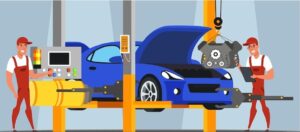
MOT tester registration process and licence application UK
Once you complete the course and demonstration, you apply through the DVSA for your official authorisation. The MOT tester registration process involves admin checks and confirmation of your training. Your employer (the Authorised Examiner) will then link your licence to their station.
MOT testing classes 4 and 7
MOT testers generally focus on two main vehicle categories:
- Class 4: Cars and small vans.
- Class 7: Goods vehicles up to 3,500 kg.
To perform accurate inspections, you must use calibrated equipment. Stations are responsible for MOT equipment calibration standards, but as a tester, you should understand the importance of logs and scheduled checks. This awareness often impresses at an interview.
How long to become an MOT tester
The time it takes to qualify as an MOT tester will vary based on the qualifications you already hold. If you already hold the Level 3, the course and admin can be done within weeks. If not, expect three to six months for training plus course time.
Career progression and opportunities
Once qualified, you can step into various MOT testing station jobs. Many stations value multi-skilled testers who can perform inspections alongside servicing or diagnostics. With experience, you could become a Quality Controller, Workshop Manager, or even a trainer for new testers.
Moving from vehicle technician to MOT tester is a common progression. Highlight your hands-on skills and diagnostic knowledge when applying, and be prepared to show how you balance efficiency with compliance.
MOT tester exam preparation and refresher training
Success in the DVSA demonstration test requires practice. Create a study plan:
- Daily: 20 minutes reading the MOT testing manual.
- Weekly: Run through a mock inspection.
- Monthly: Review DVSA updates.
For candidates returning after a break, MOT tester refresher training helps rebuild confidence. Maintain detailed records of your CPD activities so they are available for DVSA checks and compliance reviews.

Interview support and application success
Our services are designed to help you stand out:
- CV Writing: Tailored to showcase MOT certification, technical skills, and compliance knowledge.
- Interview Coaching: Learn to explain decisions clearly and demonstrate customer communication.
- Mock Interviews: Practise answering technical and behavioural questions under pressure.
- Employment Matching: Connect with stations that suit your skills and ambitions.
- Relocation Services: Support if you are moving city or considering MOT tester jobs with visa sponsorship UK.
Quality control and compliance
Every MOT station is required to carry out regular MOT quality control checks to make sure testing is consistent and accurate. These audits help protect the station’s licence and demonstrate to the DVSA that the right standards are being met. As a tester, showing attention to detail during these checks proves that you take compliance seriously and can be trusted to uphold professional standards.
Employers notice testers who contribute to smooth inspections, keep records tidy, and respond quickly to issues. Following best practices early in your career not only keeps audit results clean but also builds trust with managers and colleagues. Over time, these habits can open up progression routes into supervisory or quality controller positions, giving you more responsibility and long-term career growth.
International opportunities
Some employers offer MOT tester jobs with visa sponsorship UK. These require additional checks but can be viable routes for skilled overseas technicians. Our Relocation Services support candidates with finding housing, handling essential paperwork, and adjusting smoothly to life in the UK.
FAQs
1) What qualifications do I need to start the MOT tester course?
You must hold an IMI Level 3 automotive qualification or equivalent, plus four years’ experience. If you lack this, complete the qualification first.
2) How long does it take to get authorised after the course?
Timelines vary, but most candidates are authorised within weeks, once the MOT tester registration process is complete.
3) Do I need to study every year after qualifying?
Yes. The MOT annual training and assessment is mandatory, alongside evidence of CPD.
4) Can overseas candidates apply?
Yes, but you must still meet DVSA requirements. Some employers consider MOT tester jobs with visa sponsorship UK.
Contact us for services.
If you are ready to take action, contact us today. Our team will help you build a professional CV, practise with Mock Interviews, polish your skills with Interview Coaching, and connect you to real opportunities through our Employment Matching. For candidates relocating, we offer comprehensive Relocation Services, allowing you to focus on your career without added stress.
